

Research: What We Know
Posted in James Madison Legacy Project Expansion We the People: National Symposium on Civic Education
Diana Owen and Patrick McSweeney, Civic Education Research Lab
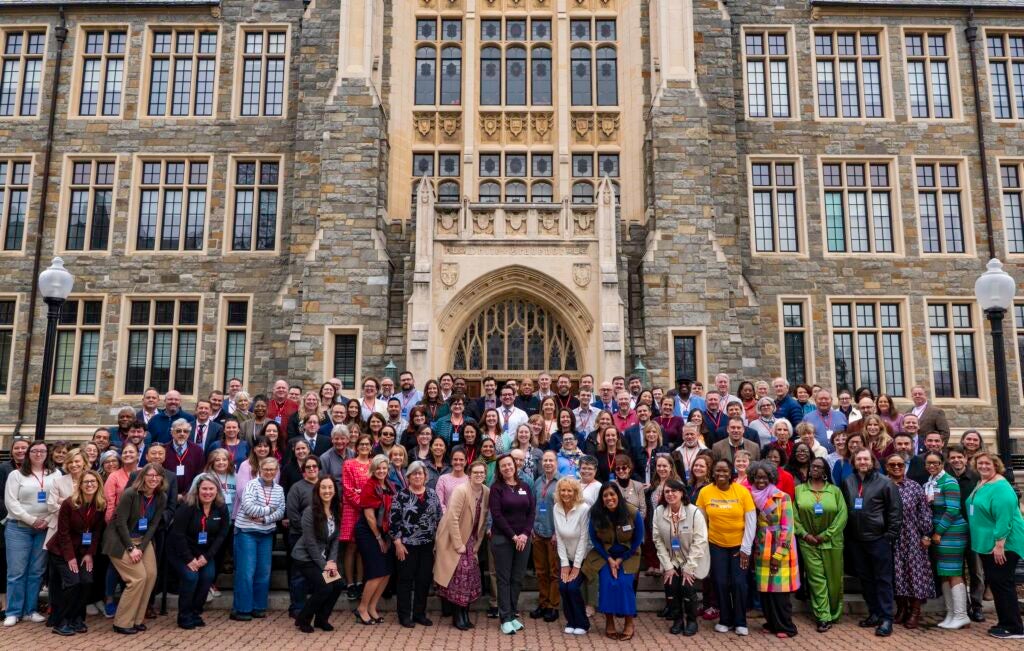
The We the People: National Symposium on Civic Education Research gave participants a chance to reflect on the state of civic education, what we have learned from research, and what still needs to be done to achieve high-quality civic education for all. Over two days, we heard from teachers, students, researchers, practitioners, policymakers, and civic education leaders who are working in different ways toward this shared goal. The Center for Civic Education and the Civic Education Research Lab are grateful for the valuable insights into the James Madison Legacy Project Expansion research that will inform our work going forward.
Strong themes emerged from the symposium.
Research demonstrates that civic education has a substantial positive influence on students’ civic development. Civic education works best when students have the opportunity to practice civics by discussing important questions, working with others, listening carefully, and seeing themselves as part of civic life. Robust civic learning depends on not only a strong curriculum, but also meaningful professional learning, dedicated teachers, innovative assessment, and community support.
Despite the progress we’ve made, the symposium also reminded us that there is still a lot of work ahead. Civic education continues to compete for time, attention, and resources in schools. Too many students still lack access to the kinds of civic learning experiences that help them develop knowledge, confidence, and a sense of responsibility. If we want civic education to receive the attention it deserves, we need to keep building evidence, sharing stories from classrooms, and making the case for why this work matters.
The need for quality civic education is great, but access remains limited.
- Since the early 2000s, over 40% of school districts have reduced class time for elementary civics and social studies.
- More than half of the districts with failing schools have cut back on civics significantly.
- Only half of K-12 students have a class that is primarily focused on civics or American government.
- Only 29% of students have a teacher whose primary responsibility is teaching civics.
- 80% of social studies teachers in public schools feel unprepared to support students’ civic learning.
- Half of K-5 teachers and one-third of 6-12 grade teachers have no civics training.
Research has consistently shown:
- Students make significant knowledge gains from quality civics instruction.
- It is easier for educators to convey civic knowledge than civic skills and dispositions.
- Active/experiential learning is highly effective in developing students’ civic competencies.
- Classrooms function as civic institutions. A positive classroom climate promotes trust, respect, and civil dialogue.
- Teacher quality makes a difference in civic learning.