

APSA and CERL Host Teaching and Learning Symposium on Civic Education and America’s 250th
Posted in News
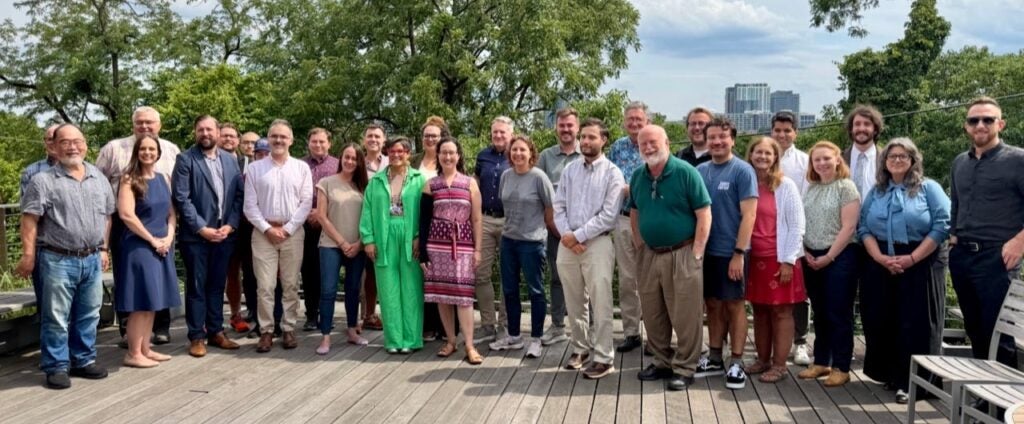
Washington, D.C. – The American Political Science Association (APSA) and the Civic Education Research Lab (CERL) hosted nearly 30 scholars, civic educators, and practitioners at Georgetown University for APSA’s Teaching and Learning Symposium on Civic Education and America’s 250th. The participants shared research, innovative lessons, and classroom resources focused on civic education at the K–12 and post-secondary levels. The symposium, held on June 25-27, was co-chaired by CERL Director Diana Owen and Professor and former APSA President John Ishiyama of the University of North Texas.
The symposium came at an important moment. As the United States reflects on its 250th anniversary, educators are thinking carefully about how to teach the nation’s founding principles, its democratic challenges, and the role students can play in civic life. That work is especially urgent in a moment marked by political polarization, debates over the teaching of American history, and concerns about young people’s trust in democratic institutions.
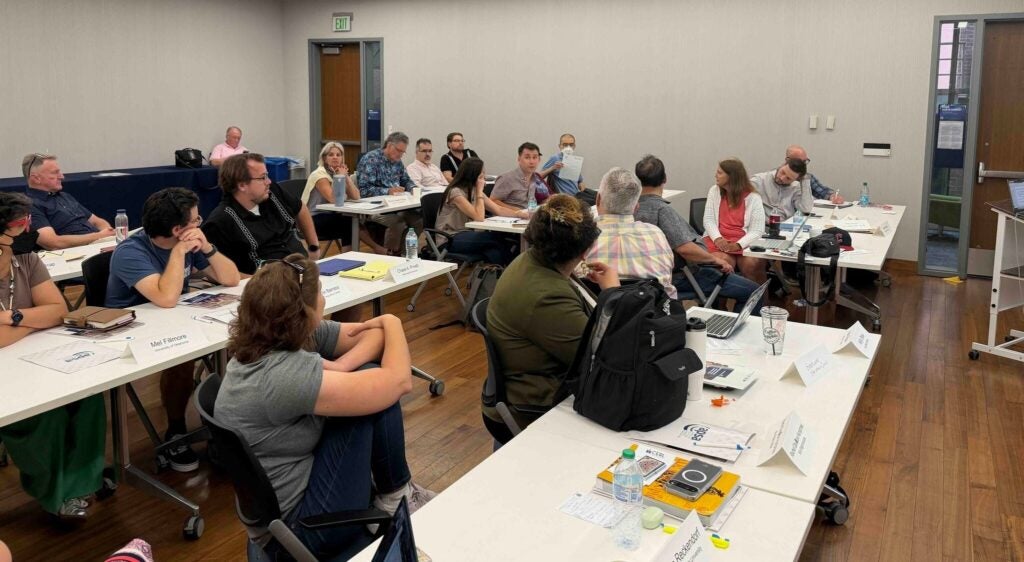
Panels covered a wide range of topics, including political thought, primary source documents, civic knowledge in challenging times, experiential learning, international perspectives on democratic education, K–12 civic education, and active learning strategies. Presenters from Duke University and the National Archives explored how students can engage with historical documents. Howell Williams from Western Connecticut State University shared how questions of memory and identity can be conveyed through a place-based lesson on “Civic Learning in Hat City.” Rachel Davidson-Humphries and Kirk Higgins from the Bill of Rights Institute, Donna Paoletti Phillips from the Center for Civic Education, and Emma Humphries from iCivics showed how the connection between civic knowledge and civic practice can be made in K-12 classrooms. Austin Barraza of San Diego Mesa College demonstrated how Ballotpedia can be used to develop the skills and dispositions needed for democratic life.
Making Civic Education Relatable
The importance of making civic education relatable was one of several themes that emerged from the symposium. Participants emphasized that students are more likely to engage deeply when they can see how civic questions connect to their own communities and experiences. Through place-based learning, classroom discussion, primary source analysis, and community engagement, presenters showed how civic education can help students understand that democracy is not only something they study, but also something they encounter in their day-to-day lives. Morningside University students in Chase Privett’s class engaged in university, community, and political activities outside of the classroom. Students in Katie Zuber’s class at John Jay College, CUNY, identified community issues they are passionate about, researched the problems, and built coalitions to solve them. For students in Mel Filmore’s class at the University of Oklahoma, understanding community issues meant studying the maps and treaties that have shaped tribal communities and the state of Oklahoma.
Learning Through Active & Experiential Means
Active and experiential learning were proposed as ways to effectively engage students. Presentations on simulations, games, community-based learning, classroom exercises, and K–12 resources showed how educators are helping students move beyond memorizing civic facts toward practicing civic skills. Dessie Zagorcheva from LaGuardia Community College, CUNY, discussed her students’ participation in debates based on simulations from the Council on Foreign Relations. Tracy Lightcap from LaGrange College engaged students through simulations from the Reacting Consortium. These approaches allowed students to deliberate, collaborate, make decisions, and experience the complexity of democratic life.
Navigating a Changing Educational Landscape
Participants also discussed the challenge of teaching civic education in a heavily polarized environment. Debates over history and identity, concerns about democratic norms, and rapid changes in technology are shaping classrooms at every level. These conditions create real challenges for educators, who must adapt civic learning to their students, institutions, and local contexts. Kelly Shaw of Iowa State University discussed how they are responding to changing state mandates and using it as an opportunity for expanding civic education.
But the challenges also underscore why civic education matters. Classrooms and universities can give students structured opportunities to examine evidence, engage across disagreement, and think seriously about their responsibilities in a democracy. Chapman Rackaway from Radford University highlighted how universities can prioritize civic education by measuring student growth through assessments and providing students with occasions for civic engagement. Joanna Kenty from The Renovator and Rutgers University-Newark and Joshua Jansa from Oklahoma State University both recognized that grad students play an important role in civic education, but need training and opportunities from their departments.
Continuing the Conversation
The conversations at Georgetown also raised larger questions for the field. How can educators help students feel a sense of civic agency while also giving them a realistic understanding of how political institutions work? How can innovative teaching practices be shared more widely, studied more carefully, and adapted across different classroom contexts? And how can civic educators continue to support one another in a moment when this work can feel both essential and difficult?
In the wake of America’s 250th anniversary, these conversations can and should continue beyond the symposium. Presenters will share resources through APSA Educate, giving other educators access to ideas, assignments, and materials they can adapt for their own classrooms. CERL and APSA will also continue to highlight lessons from the symposium and encourage further discussion about how civic education can meet this moment. The APSA Annual Meeting in Boston will provide an opportunity to build upon the symposium’s themes.
The most hopeful part of the symposium was the evidence that educators are continuing to respond with creativity, seriousness, and dedication. Across institutions and grade levels, scholars and educators are developing dynamic ways to help students not only understand democracy, but also realize that they are active agents in the democratic process.
CIVIC EDUCATION AND AMERICA’S 250th AGENDA
Political Thought & Primary Source Documents
- Teaching American Political Thought: Encountering the Constitution and Responding to Injustice, Alec Arellano, Rice University
- The Same Citizens, the Same Civics? Teaching Civics in the University Classroom and Beyond, Tingfeng Yan, University of Chicago
- Civic Learning in Hat City: Place-based History and Civic Engagement, Howell Williams, Western Connecticut State University
- Analyzing Tribal Treaties, Melanie Fillmore, Department of Native American Studies, University of Oklahoma
- Civics Isn’t a Given: Learning Opportunities Tied to Civic Outcomes in a History Class, Emma Humphries, iCivics
- The Politics of Memory, Identity & America’s 250th, Alexandra Reckendorf, Virginia Commonwealth University
Civic Knowledge in Challenging Times
- An Integrated Civic Education Ecosystem for America’s 250th, Chapman Rackaway, Radford University
- The Third Way: Navigating Partisan Motivations, Kelly Shaw, Iowa State University
- From Civic Learning to Civic Infrastructure: Scaling Democratic Engagement through CREATE and CREATE250, David Roof, Ball State University
- Teaching ‘Politics in the Time of Trump’, Joshua Koss, Eastern Michigan University
Civic Engagement & Experiential Learning
- Civic Engagement Experiences and Exercises: Learning about American Politics In and Outside the Classroom, Chase Privett, Morningside University
- Grad Students and Good (Academic) Citizenship, Joanna Kenty, The Renovator/Rutgers University – Newark
- Experiencing Civic Engagement in the Classroom, Katie Zuber, John Jay College, CUNY
International Perspectives on Civic Engagement
- European Models of Learning for Democracy: Study Circles, Folk High Schools, Project Learning and more, Titus Alexander, Democracy Matters
- Teaching Democratic Erosion: Pedagogical Strategies Using CFR Education Resources, Dessie Zagorcheva, City University of New York – LAGCC
K-12 Civic Education
- Universities as Engines for Civics Renewal, Matthew Bunyi, Duke University; Russell Bargmann, Duke University, Joanna Capps, National Archives Foundation
- Documents, Democracy, and Dispositions: Civic Competency Development in We the People, Donna Paoletti Phillips, Center for Civic Education and Diana Owen, Georgetown University
- Educating for Self-Governance: Civic Knowledge, Virtue, and Practice at America’s 250th, Rachel Davidson-Humphries, Bill of Rights Institute and Kirk Higgins, Bill of Rights Institute
Teaching Resources & Active Learning
- An Interactive Revolution: Reacting to the Past and Pedagogy for the 250th Anniversary of the American Revolution, Tracy Lightcap, LaGrange College
- Using Ballotpedia to Promote Civic Engagement in an Online Asynchronous Course, Austin Barraza, San Diego Mesa College
- Active Learning Specialists in College Civics Courses, Joshua Jansa, Oklahoma State University